
Nail services are not only style. Nail work is personal-contact work that depends on sanitation, licensing literacy, professional discipline, and public trust.
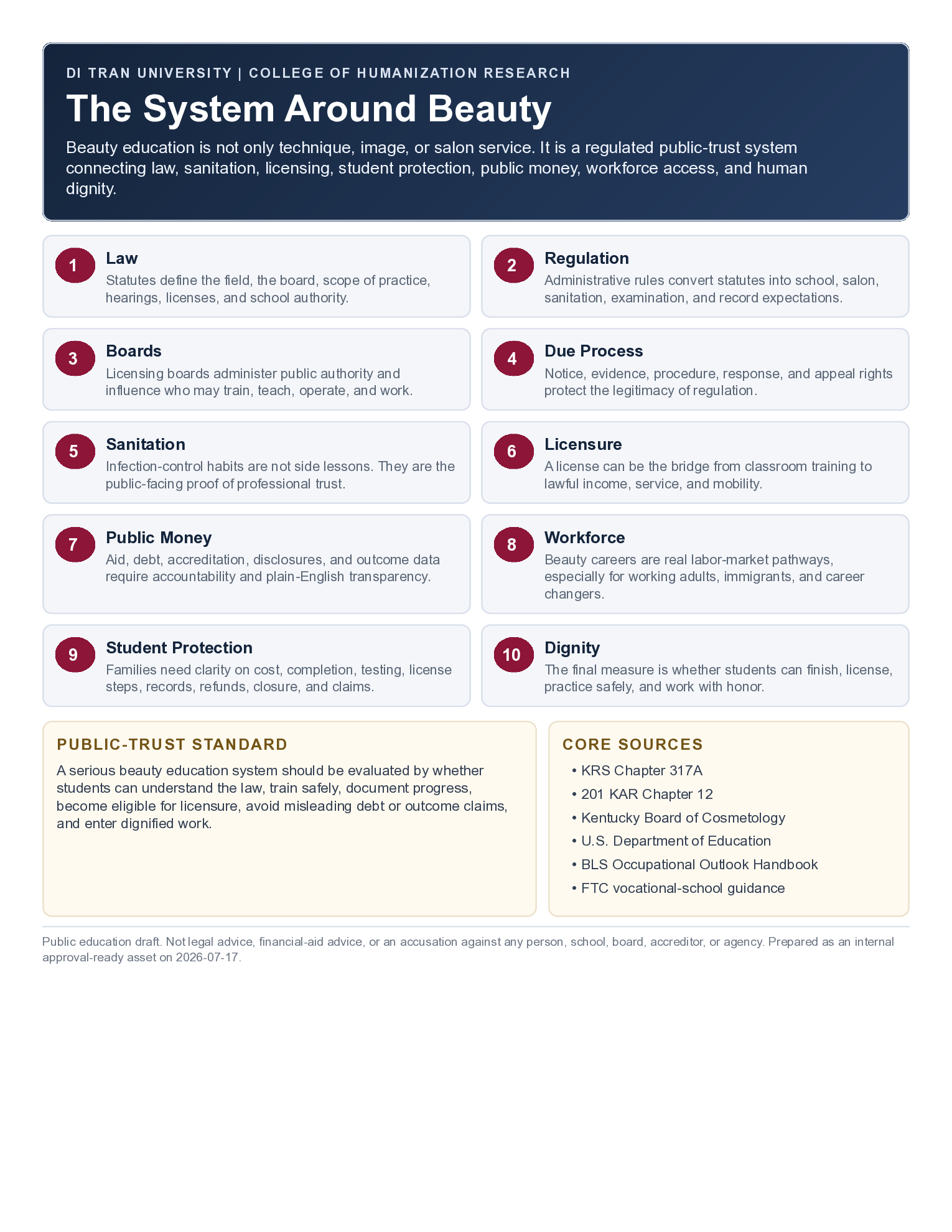
The Public-Trust Side of Nail Work
Manicuring and pedicuring involve hands, feet, tools, products, surfaces, and repeated public contact. That is why sanitation and safe practice are central to professional trust.
Licensure Is Workforce Infrastructure
A nail license can become a gate to lawful work, entrepreneurship, and family income. For many Vietnamese, immigrant, and working-family communities, the nail industry has functioned as an access point to American small-business life.
Clear Rules Protect Workers and the Public
Plain-English licensing and sanitation education helps students, salon owners, workers, families, and customers understand what the profession requires. Clear rules should raise standards without turning confusion into a barrier.
Dignity Without Overclaiming
The public message should be careful: no article should promise income, licensure, legal outcomes, government approval, or universal business success. The stronger claim is simpler and true: clear education, sanitation discipline, and licensing literacy help protect trust.
What Nail Students and Salons Should Keep Visible
- Know the licensing pathway and renewal requirements.
- Treat sanitation as daily professional identity, not only inspection readiness.
- Keep records and school documents organized.
- Avoid unsupported income, job, or license guarantees.
- Explain rules in plain language for multilingual workers and families.
Public Sources
This article uses public education sources only. It is not legal advice, financial-aid advice, or an accusation against any person, school, board, accreditor, or agency.
- Kentucky Revised Statutes, KRS Chapter 317A
- Kentucky Administrative Regulations, 201 KAR Chapter 12
- 201 KAR 12:082, education requirements and school administration
- Kentucky Board of Cosmetology
- Kentucky Board of Cosmetology licensure information
- U.S. Department of Education, overview of accreditation
- U.S. Department of Education College Scorecard
- Federal Student Aid, Financial Value Transparency and Gainful Employment
- Federal Register, FVT/GE final rule
- U.S. Bureau of Labor Statistics Occupational Outlook Handbook
- BLS, Barbers, Hairstylists, and Cosmetologists
- BLS, Manicurists and Pedicurists
- Federal Trade Commission, choosing a vocational school or certificate program
Public Boundary
This article is public education for the nail and beauty community. It is not legal advice and does not replace official Kentucky statutes, regulations, board guidance, or qualified counsel.